Campaign DesignMotionAI GenerationSocial ImpactNGOSocial Media
GenevaCall — Principles of Humanity Campaign
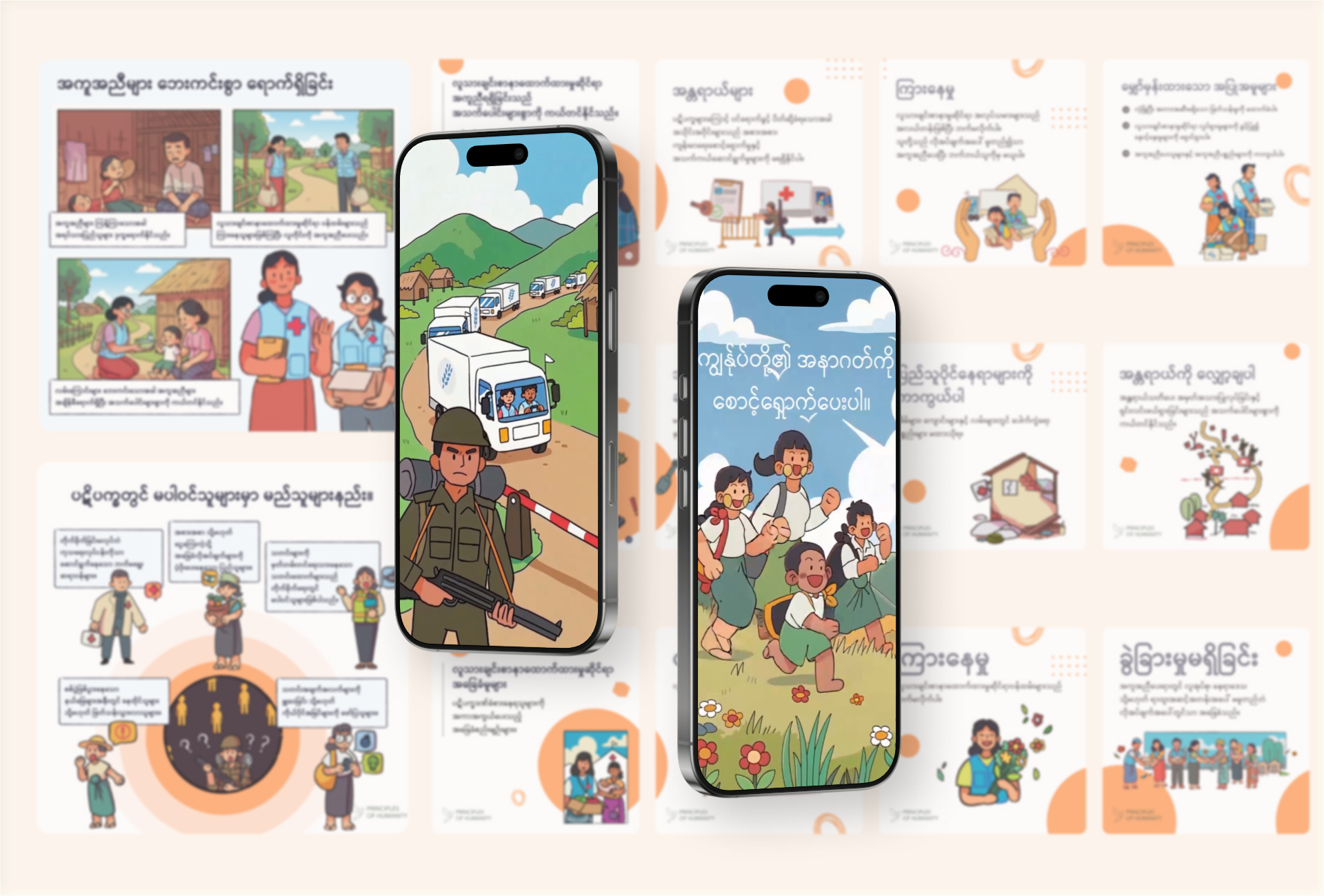
Full social media campaign for Myanmar — 4 Facebook post series, 2 infographics, a comic post, and 2 animated campaign videos. Produced in one month using Midjourney, NanoBanana, Seedance AI, and After Effects.
Duration
1 month · 2026
Role
Graphic & Motion Designer
Company
Relief Applications client: Geneva Call
Country
Myanmar (campaign) Remote (production)
Team
Diana Hubska (Graphic & Motion Designer) GenevaCall Communications Team
Context
Geneva Call is an international humanitarian organization that engages armed actors to respect international law. The Myanmar campaign needed to communicate the Principles of Humanity (impartiality, neutrality, independence) across social media platforms. I received PDF reference materials from the client and produced 4 Facebook post series, 2 infographics, a comic post, and 2 campaign videos within one month.
Challenge
Recreating an established illustration style using AI tools requires knowing which outputs to reject and why, and knowing when to stop generating and start editing manually. Campaign scale, cultural sensitivity, and a one-month deadline all applied pressure at the same time.
01
Facebook Post Series
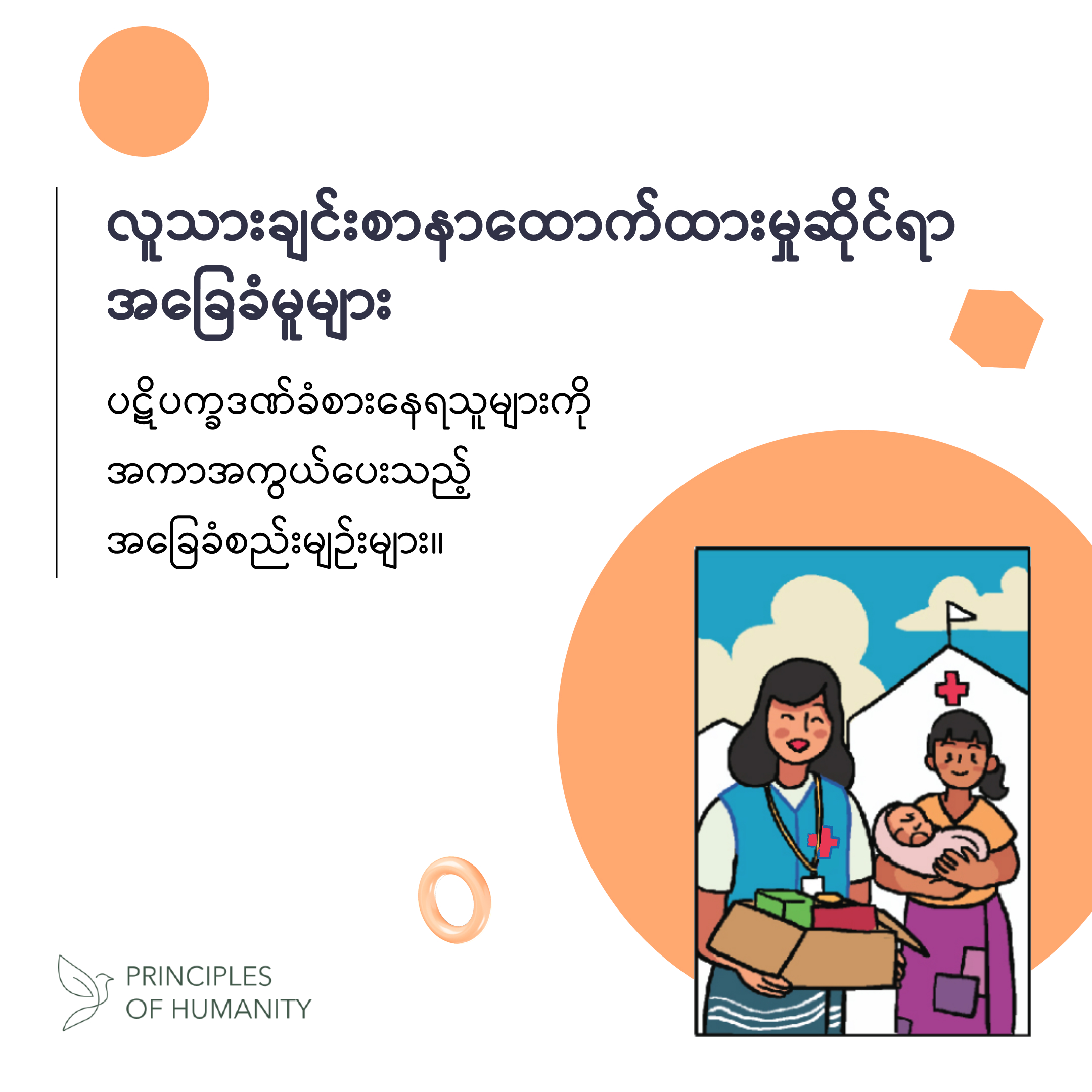
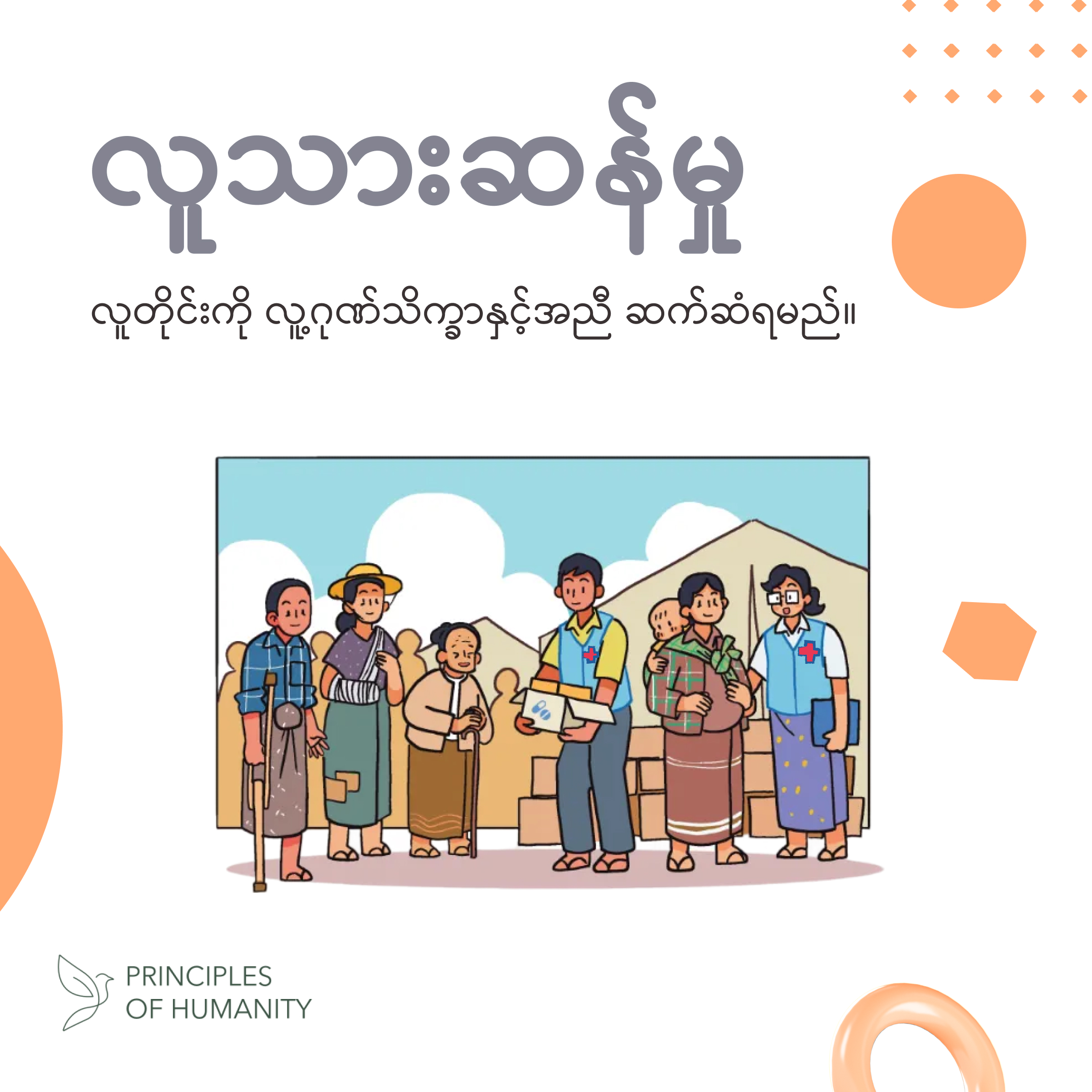
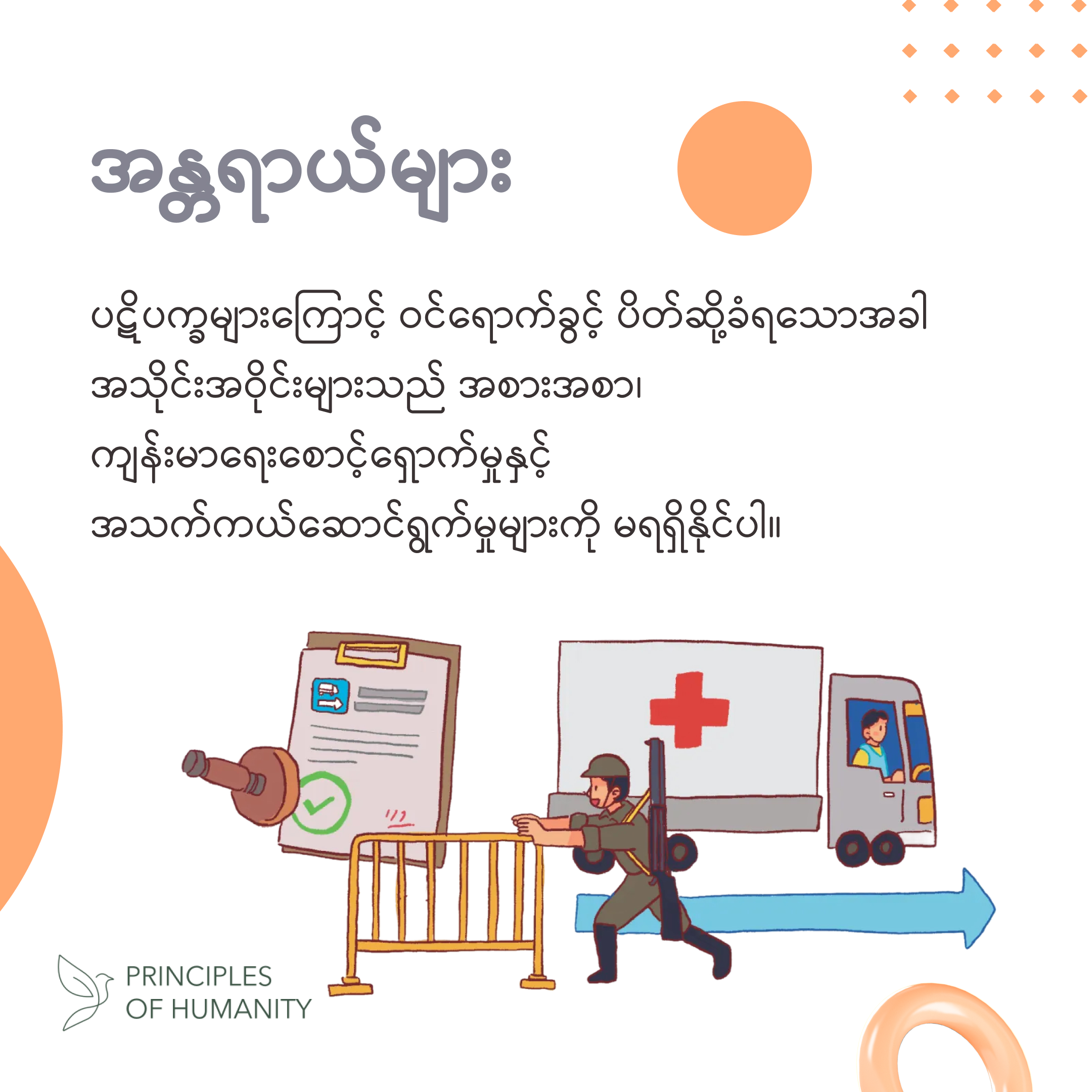
Four post series covering different Principles of Humanity, 5–6 slides each. All Burmese text was set in Figma (Adobe tools do not render Myanmar script correctly — more on this in Section 04), exported as images, and placed into the final artwork. The client reviewed every slide for linguistic accuracy before final export.
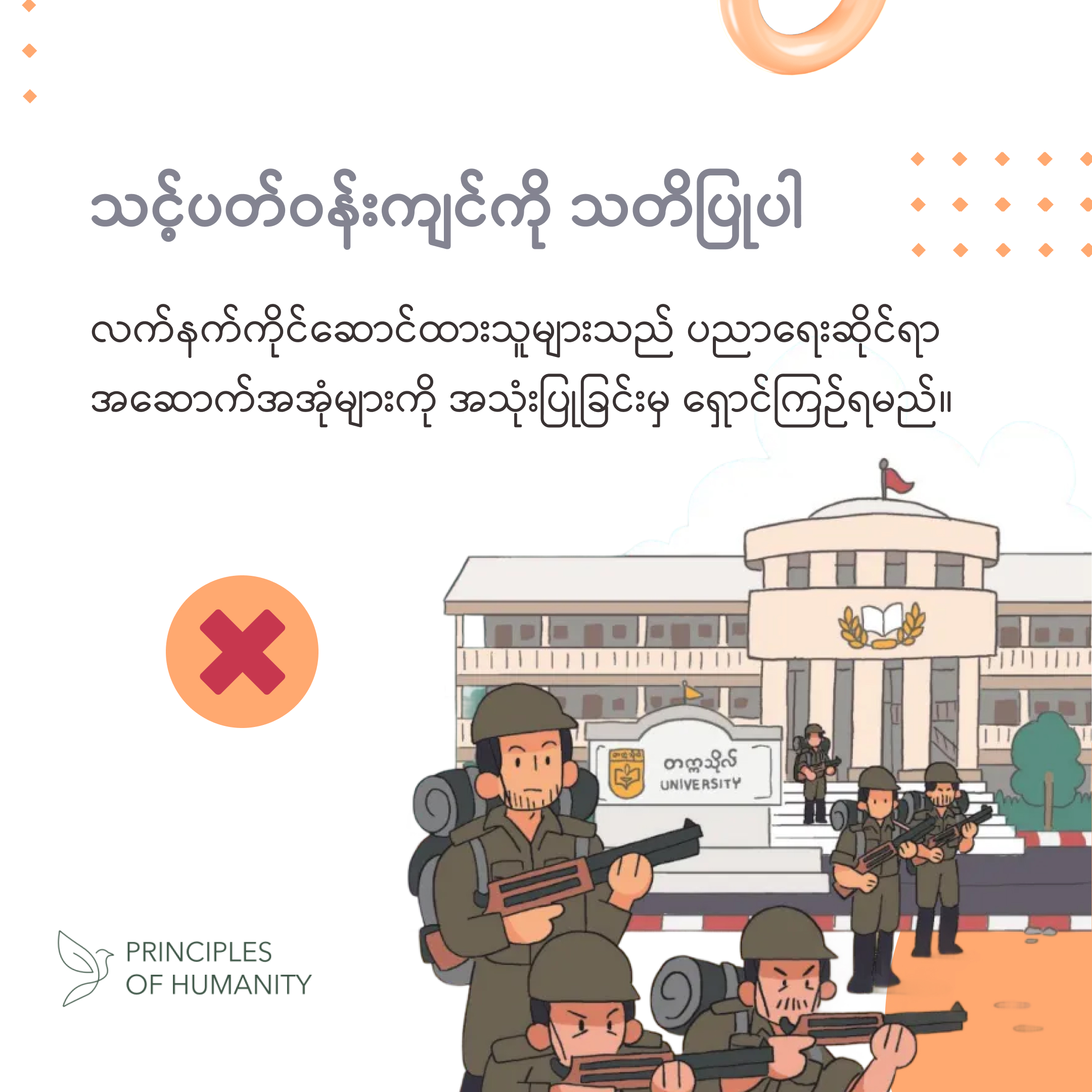
Series 1 — Aid workers and civilian protection
Series 2 — Access to humanitarian services
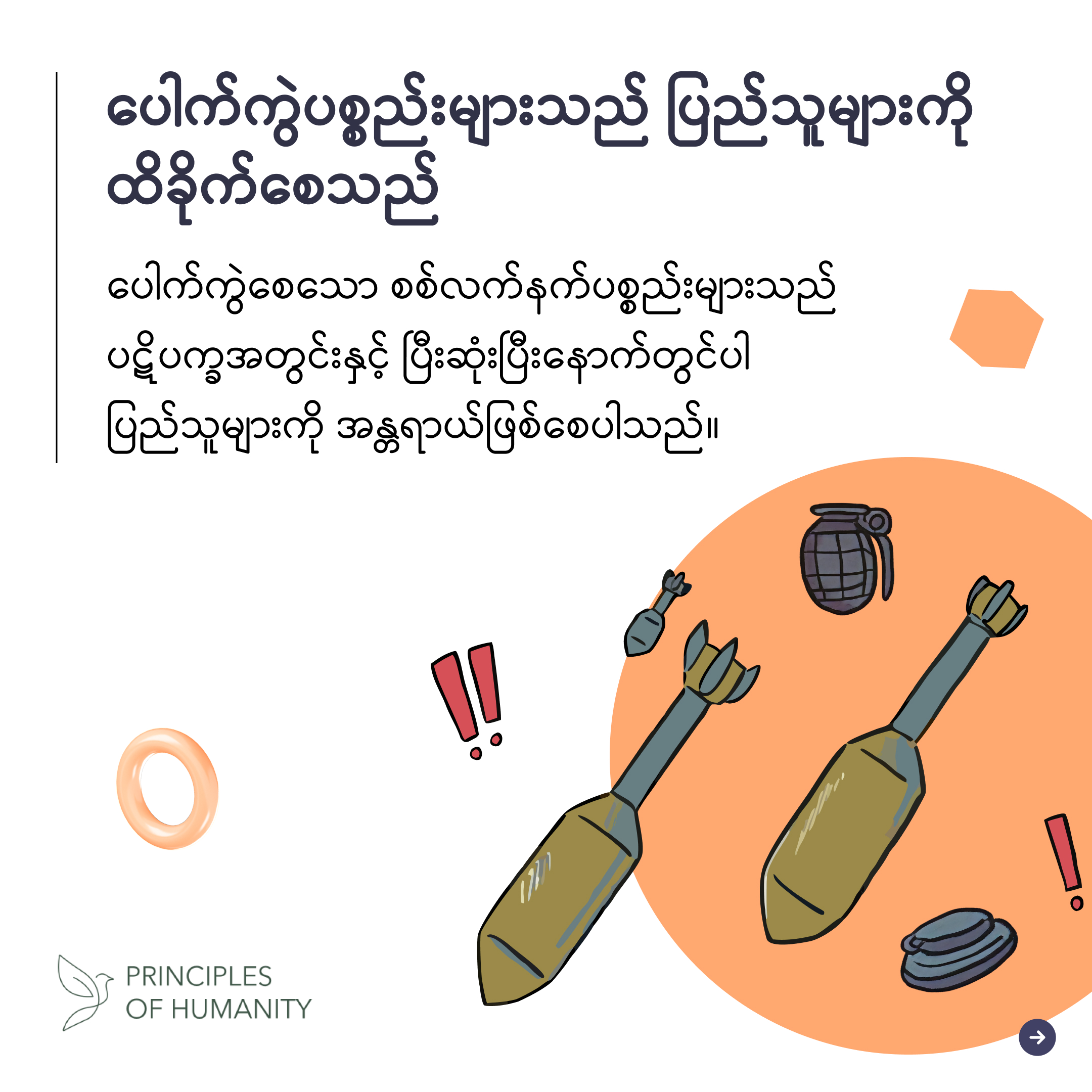
Series 3 — Protection of civilians
Series 4 — Healthcare and education access
Also produced: 2 infographics and a comic-format post
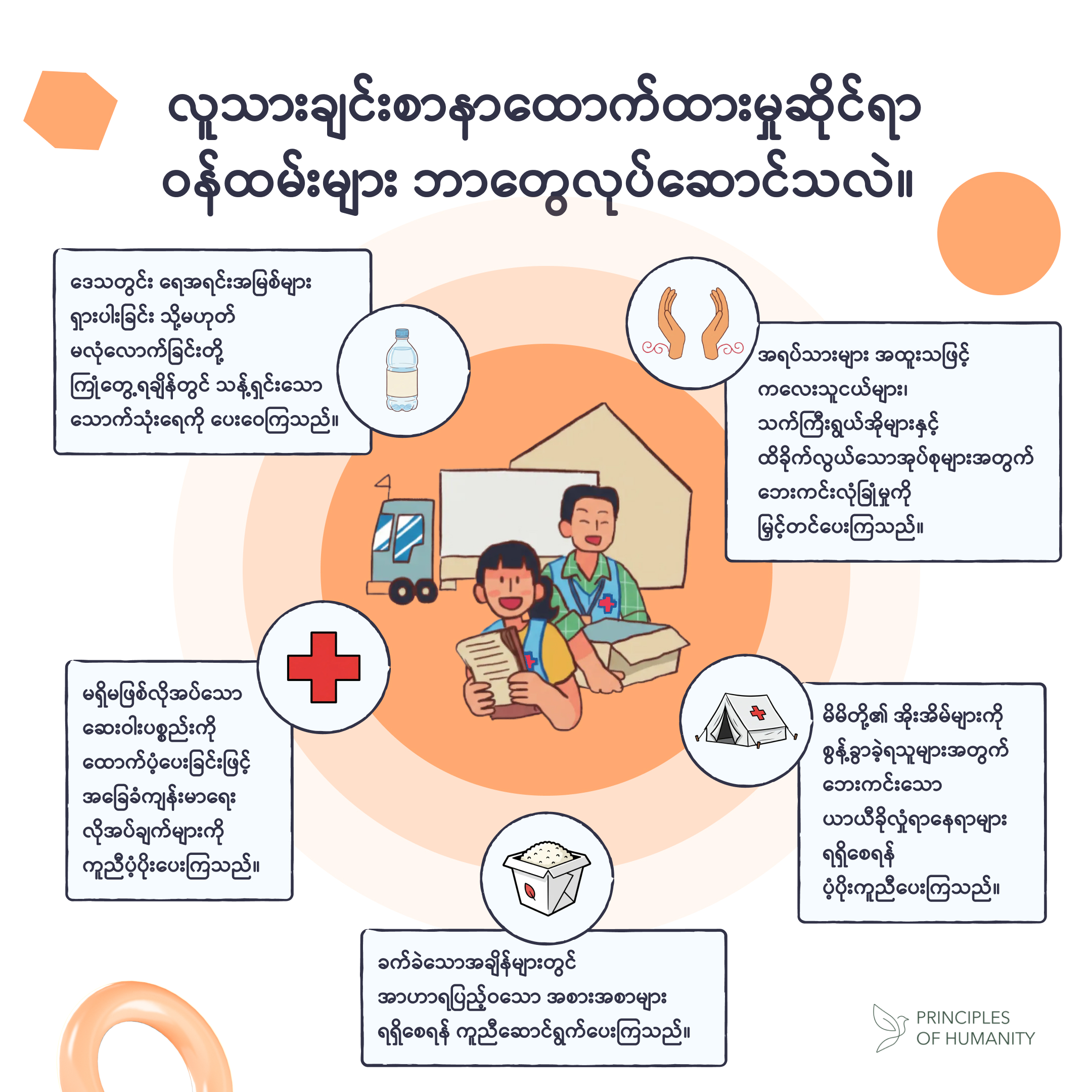
Infographic 1 — Circular layout, equal weight for each principle
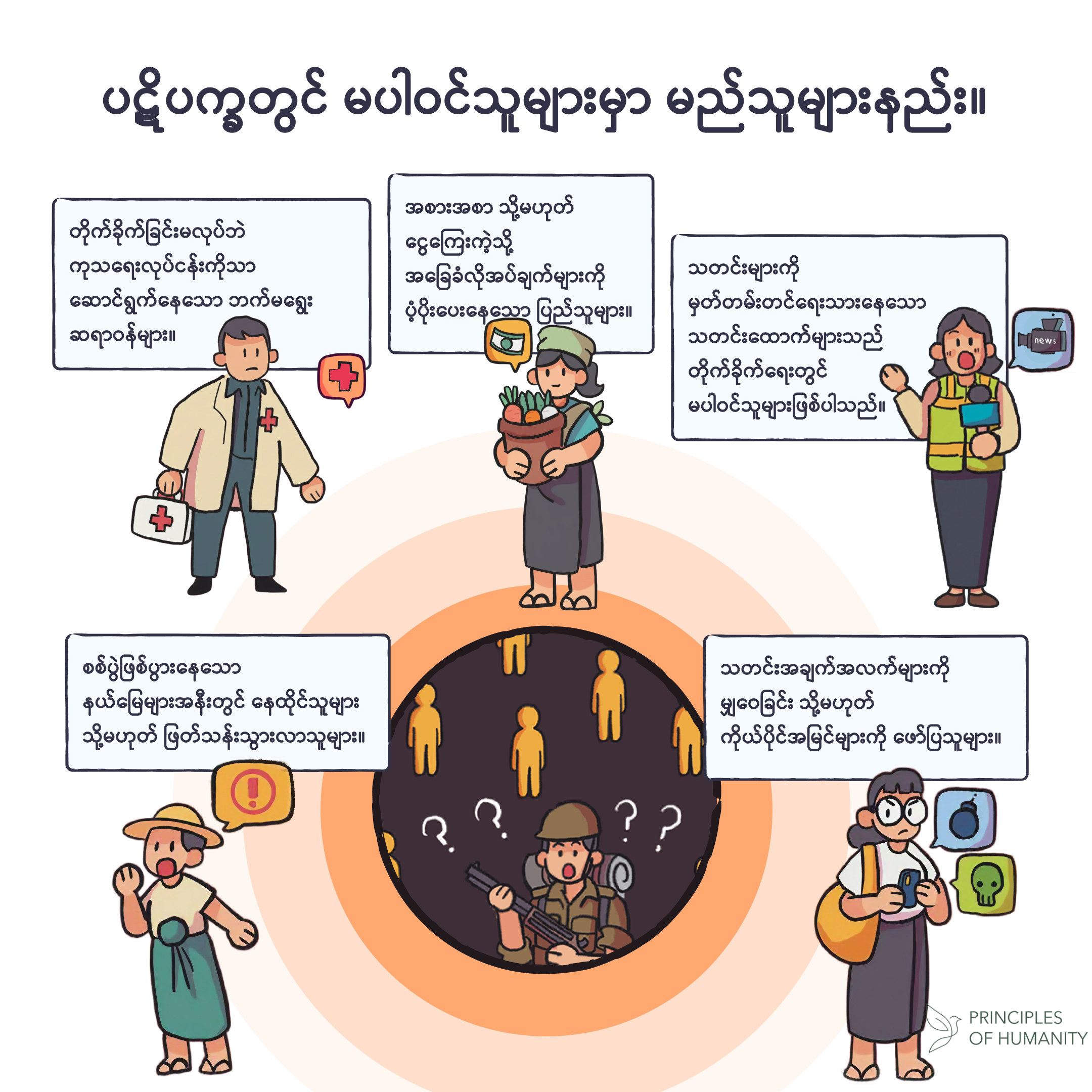
Infographic 2
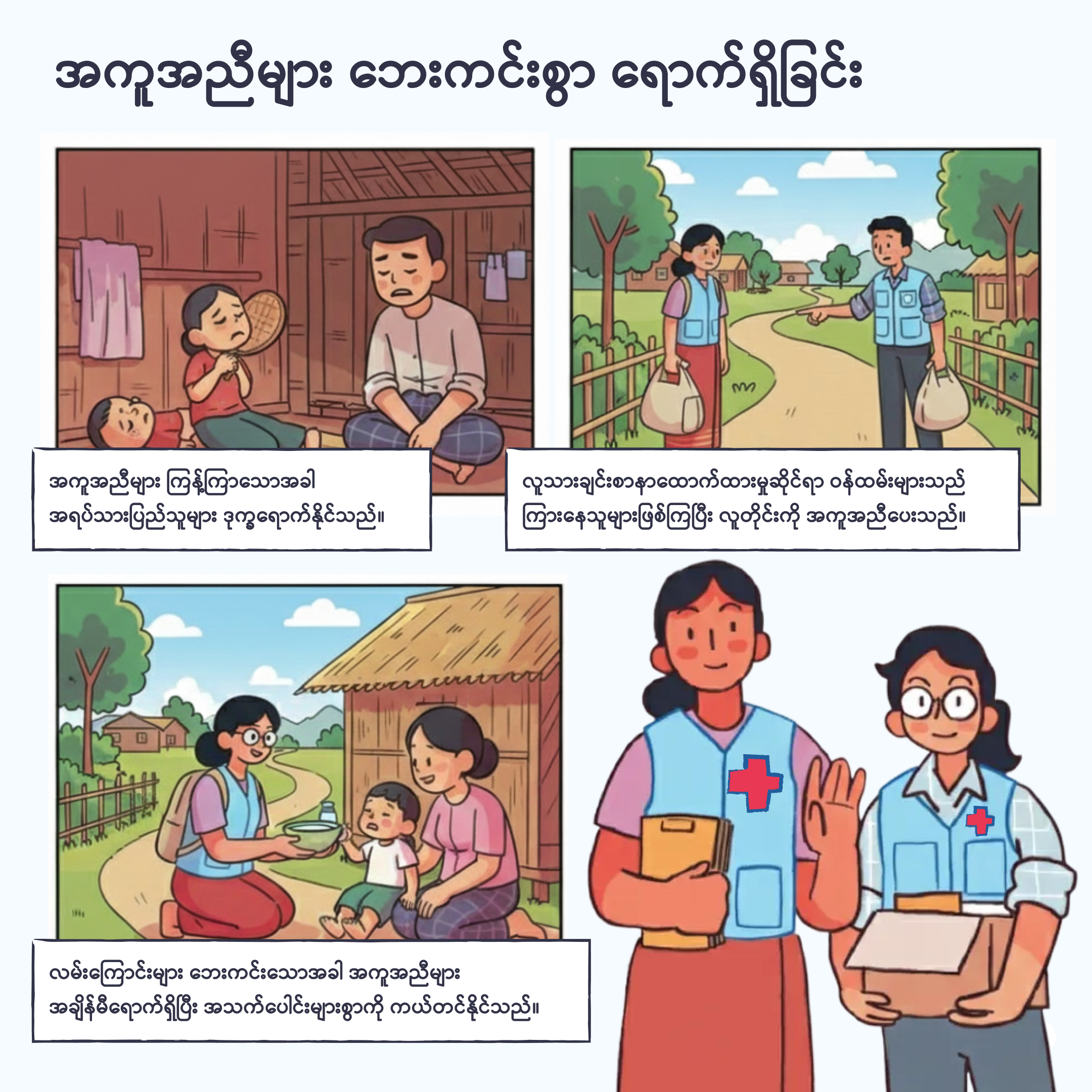
Comic-format post — lighter visual register
02
AI Generation Workflow: NanoBanana → Seedance
NanoBanana (via Artlist.io) generated all start and end frames. The workflow ran in two steps per scene: generate a start frame, generate an end frame, then feed both into Seedance AI to animate the transition. This two-frame method produced more stable animations than prompting Seedance directly. Midjourney handled the static editorial illustrations for the social posts.
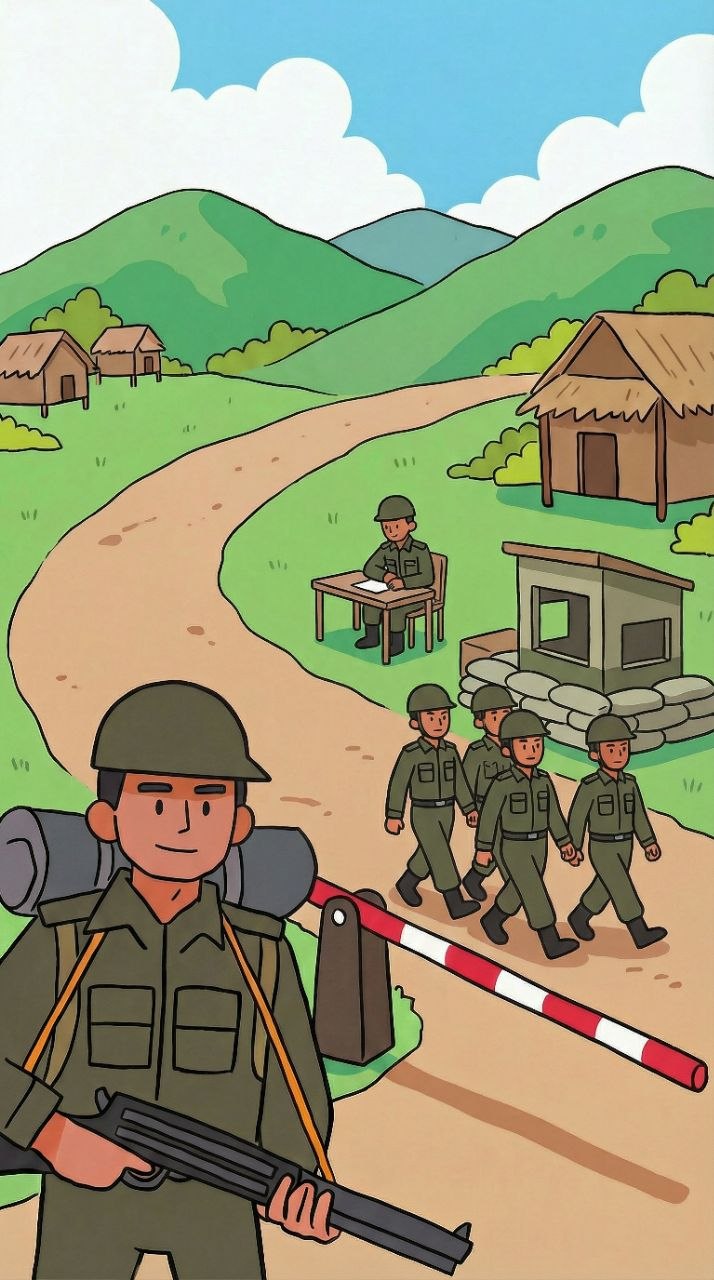
Start Frame
NanoBanana via Artlist.io
Soldiers at checkpoint — opening composition
Prompt (NanoBanana)
Keep the scenery, no trucks, barrier lowered, zoom out to see the house, where soldiers work and soldiers marching next to the barrier
Model: Nano Banana9:162K · JPEGDec 4, 2025
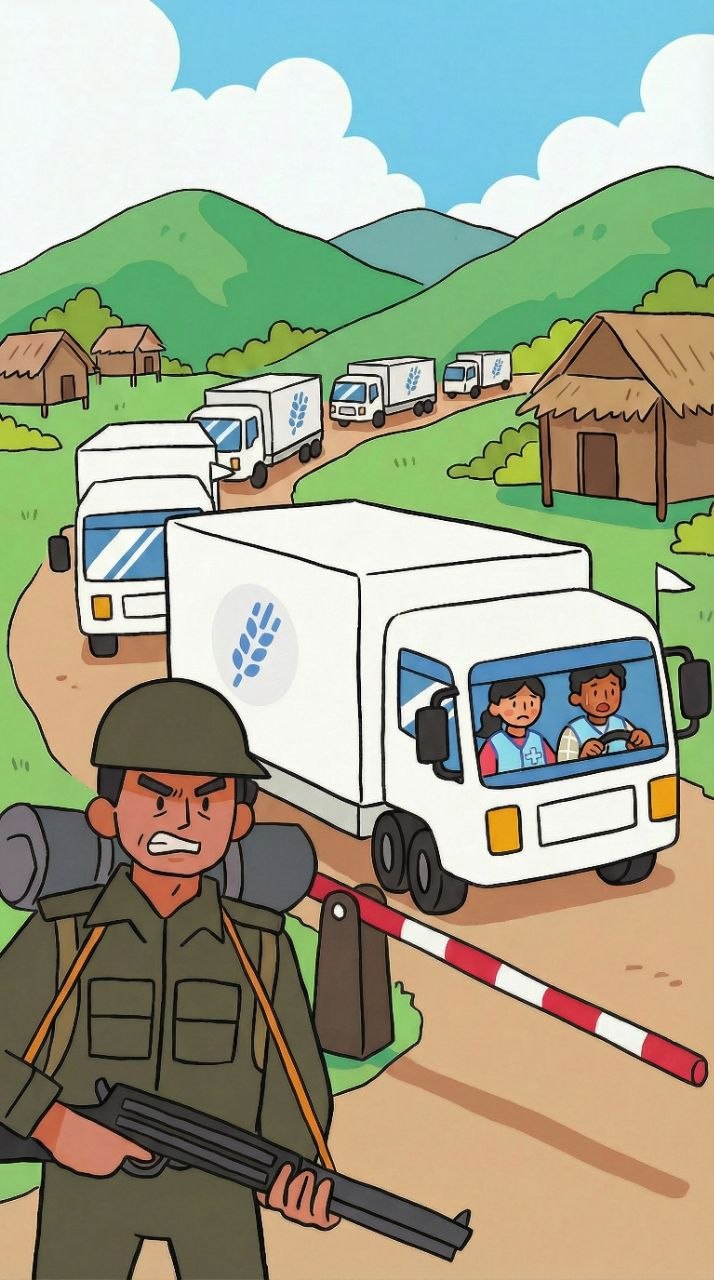
End Frame
NanoBanana via Artlist.io
Aid worker car arrives — scene resolution
Prompt (NanoBanana)
The same scenery, a humanitarian aid car approaches the barrier with the soldier, the barrier is raising
Model: Nano Banana9:162K · JPEG
Animated Clip
Seedance AI
Seedance animates between the two frames — 20+ clips produced and assembled in After Effects, adapted for social media formats
Prompt (Seedance 1.0 Pro)
The soldier in the foreground smoothly enters the frame from left with eased effect. The soldiers in background are marching out of the frame. The aid worker cars are approaching. The soldier in the foreground gets angry and rises his riffle.
Two children holding hands, smiling happily in school uniforms with bags. Flowers gently sway around them in a light breeze. Soft sunlight brightens the scene
Over the course of this campaign, roughly 40% of generated videos were rejected. The criteria were specific: consistent object geometry frame to frame, neutral camera movement, appropriate emotional register for a humanitarian context. Good generation workflow is mostly elimination.
Production Challenge: Myanmar Script in Adobe Tools
A non-obvious technical issue that cost significant time — documented here because no documentation warned about it.
The problem: Adobe tools (Illustrator and After Effects) do not render Myanmar script correctly. Characters appear in the right order on screen but export with symbols rearranged or substituted. The tools were not confused about the font file but about the Unicode rendering order for a script that combines characters in ways Latin-based tools are not built for.
The fix: Set all Burmese text in Figma, which handles Myanmar script rendering correctly, then export each text block as an image. Those image files were imported into After Effects and Illustrator, placed as visual elements rather than live type. It added a step to every asset but made the output reliable.
A second issue: In Burmese, words are not separated by spaces. A space character functions like punctuation, closer to a comma or a full stop. This required a separate review loop with the client to verify that every line break and spacing decision read correctly to a native speaker. The client checked every slide of every series before final export.
05
Animated Campaign Videos
Two finished campaign videos were delivered: one on humanitarian worker access, one on education protection. 20+ Seedance AI clips were produced, approved, color-corrected, and assembled in After Effects — adapted for social media formats and delivered with subtitles.
Supporting clips — Seedance AI (muted preview)
Final campaign videos (full cut)
Video 1 — Let Humanitarian Workers
Video 2 — Protect Education
Deliverables
4 Facebook post series — 22+ individual slides in Burmese
2 infographic designs
Comic-format post
2 final animated campaign videos (subtitled, edited in After Effects)
20+ Seedance AI clips (approved, color-corrected, assembled)
The campaign ran on Geneva Call's social media channels for the Myanmar audience. AI-assisted production cut per-asset time by approximately 4x. The Figma-as-text-renderer workaround resolved the Myanmar script issue and became the standard method for all subsequent Burmese-language assets in the project.